The photographical narrations of a photographer in a remote part of western Alaska. Follow his adventures along the banks of the Yukon River and view his inspiring images as he shares with you a collection of his life experiences.
Showing posts with label Subsistance Lifestyle. Show all posts
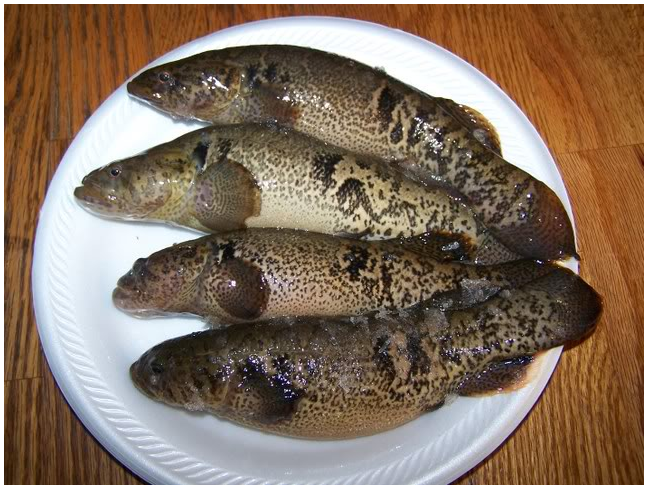
Blackfish
These small fish are caught in the winter under the ice in fish traps and are a important food source to the Yupik Eskimos of western Alaska. I like to keep a trap out all winter and give fish to the elders they really enjoy them, I like them too.
These here are some trophy sized blackfish.
They are eaten cooked, but some of elders do eat them frozen and dipped in seal oil MMMM....mmmmm. The ones in the picture are alive. They are not eaten if they are dead; folks here boil them alive. They can partially freeze and come back to life when thawed out and are perfectly fine. They can also breathe air from the water's surface when the oxygen gets depleted in swampy areas. Very prehistoric kind of creatures.
Fur Season
As December rolls in, the men are once again setting their traps in hope of catching some prime beaver, lynx, fox, mink, marten, wolf, and wolverine. Once the fur is caught, skinned, stretched, and dried it will be traded for much needed cash to buy Christmas presents, fuel, oil, gas, and pay bills and other needs.
During the winter, the few jobs in the construction have shut down. Fishing and wild-land firefighting is over. So it can be a economically challenging time for villagers as they try to make a living. Fur sales is one way they can make it, rather than welfare and government subsidies
The animal populations here are just short of amazing. Since we have so few people per square mile, the fur resource is hardly even fully utilized. We have beaver everywhere and lots of fox and we are in a high cycle for lynx. We can harvest these animals during the season as a renewable resource. And it will not harm the population as a whole. As one area is trapped, it makes room for the young of the past year to fill in the void and reproduce in that area. It's a never ending cycle that works pretty good. The alternative to controlling the populations is disease and starvation naturally, and that is cruel and such a waste in my opinion.
There are people that are dead set against trapping; claiming it's cruel and unjust. But the alternative is worse and can be way more devastating to the populations than what the trappers can ever do. And if the populations ever get low enough to warrant a decrease, trapping seasons are adjusted or even closed entirely to let the population recoup until they are healthy again.
Fur is truly a green renewable resource and very warm. The folks that live in northern climates still wear fur. Since there is no real substitute that is comparable in warmth and style, it's the only logical thing to use. And it looks great as well.
Many trappers feed themselves with there catch. Beaver, muskrat, lynx, and even otter are eaten. And if not being eaten by the trapper and their family- the village dogs get their much needed protein (that is so important to survive the sub zero temperatures in this northern climate).
How To Set an Ice Net
Fish is a very important food source here on the big river. During summer it's salmon and in winter there is four species referred to as whitefish or white meated fish. There is burbot, lush, sheefish (that can get huge and look like a tarpon), and then two smaller species of actual whitefish.
These are important for fresh fish during the winter months and most families here will keep an under ice net all winter.
Early in November when the Yukon has frozen over only a few inches, all the men will go out on the new ice right in front of the village. There, they strech out their nets on top of a smooth patch of ice to create a marker for holes that they will chop to set the net. Laying the net down helps to measure the length.
At each end of the net a hole is chipped through the ice, until we have a round hole about 3 feet in diameter.
We also have a long pole or board about ten to fifteen feet long. A short string is tied on with a net floater (or an empty air-tight jug) attached to it.
The pole is laid on the ice as a marker in between the two holes and more holes are chopped through the ice at each measured length of the pole.
Then a line is tied to the floater and pushed under the ice until the floater pops up in the next hole. The line is then untied and held while the pole is retracted out the way it came. The line is tied again and pushed under the ice again until the floater pops up in the next hole and so on until you have a line under the ice from the first hole to the furtherest hole.
Then the net is piled in front of one hole and tied to the line. Going to the other hole, pull the line as the net feeds down the hole and under the ice. Continue to pull until it pops out at the other end. It is then tied to a long pole (approximately 6 to 8 feet). That pole is submersed down the hole several feet and tied to a brace stick that is frozen in the ice beside the hole for support. (To create the brace stick, chop a hole beside the large hole and place the brace stick inside. By the time we finish setting the net the brace stick is frozen into the ice enough to hold the other stick). The other end is also tied to a pole in the same manner. We push the stick straight down through the hole into the water and tie it off on a wooden support brace frozen into the ice as well.
When checking the net daily, ice is chopped out of the two end holes and the slush is scooped out with a shovel. Then a line is laid out the a little longer than the length of the net on top the ice. One of the poles is then untied from the support and pulled up out of the water. The net is untied from that pole and tied to the line stretched out on top the ice. It is let go. Then we go to the other end; that pole is untied from the support then pulled out of the water and left tied to the pole as the net is pulled out of the water. We pile the net on top of the ice in front of the hole and each fish is carfully picked out of the net as they come out on top of the ice.
Once you reach the end of the net the end is thrown back into the hole. The line at the other end, at the far hole, is pulled and the net feeds itself back under the ice. The pole is reset on the support stick and the other end is untied from the line and reattached to the pole and tied back to the support.
The line is rewrapped and the fish are loaded up in a sack to be shared with friends and family back in the village.
Waiting For Eels
It is Halloween and the river is freezing. Cakes of ice are flowing. The ice shelf is growing out from the edge and getting thicker each day. The nights have been down in the teens and single digits and the mighty Yukon is slowing down for the winter.
The salmon are done running, but there are still whitefish and others in the river. But right now it’s time for the great eel migration. They enter the Yukon from the Bering Sea. After living their life attached to salmon, sucking the life blood out of them until they are fat enough to detach, they make their migration up river to spawn in the silty Yukon River.
Lamprey eels are a delicacy here on the Yukon. They are raked up from long narrow holes chopped in the ice, using a long board with sharp headless nails up and down the sides. The eel stick is raked through the water back and forth until an eel is impaled on the nails much like a hotdog on a stick. They wrap there slithering bodies around the stick and are raked up and out from under the water and thrown on top of the ice. They act and look very much like a snakes slithering around your feet until the cold overcomes them and they quickly freeze.
When they are running thick dip nets are used and great quantities can be harvested. We even have a commercial fishery here on the Yukon and we will get a $1 a pound for them at the local salmon buying office. There is a market for them in Asia and they are also an important food source here.
The first eels of the season are brought home and shared for everyone to get a taste of the rich oily flavor. They remind me of canned sardines and are very good baked or fried.
Some years we miss them and they pass, so we try to check the river daily starting before Halloween and into mid-November until they arrive. Each day someone from the village will chop a slot in the ice to see if they have arrived.
We are still waiting patiently ....this all hallows eve.
The Autumn Harvest
Making meat is one of the most important aspects of life here in rural Alaska. I would say it's right up there with getting our wood pile put up so we can have heat during the long Alaskan winter.
Meat can come in many forms. Folks here harvest waterfowl and ptarmigin, and even some caribou and seal. But it's moose that fills our freezers and is on the table more than most other dishes.
Moose is suprisingly very good, and very good for you. It's filled with vitimins and tastes great; nice and tender (and nice and fat depending on your timing of the harvest and the animal chosen for the freezer).
We don't hunt for horns here, so an average sized bull with modest antlers is desirable. We harvest before the rut, so the meat is tender and doesn't have a gamey taste, like a late season large bull would have.
The hunt itself is a peaceful, get in tune with nature, kind of thing. There is alot of waiting by the right patch of timber. Usualy there is swamp involved near by and we sit and watch the waterfowl, beaver, and other wildlife. We sit there until a moose steps out of the thick timber to graze or get a drink from the nearby swamp.
When a moose is finally down, we take great care to keep the meat clean and dry. We use tarps to lay our winters food on as we load it up in the boat. It is then brought home and hung in the smoke house to age, then cut up and packaged for the freezer by our own hands in the kitchen (no processing plants here).
The freezer is filled by late September fall. And we are lucky if we can find space in the freezer to stuff in a few more ducks. This will be our larder for the long winter months, supplimented with fresh fish from our under ice nets, and perhaps fresh caribou if they migrate close enough.
We can never count on the planes to be flying us in our store bought groceries. We are much like farmers that have crops and animals that need no tending, and have learned to be able to count on ourselves for our daily bread.
Summer Salmon
As spring gives way to summer, we find ourselves drifting down the Yukon River tied to our salmon net. It is stretched out in a great arc beside the boat. We have bouys attatched to both ends, so we can let go and switch sides to gently tow it in towards the shore or out into the deeper channel, depending on where you think the salmon are migrating upstream.
Salmon are about the most important resourse we have out here. They are dried and smoked and packed in barrels for winter food. Some are split in half and dried just for sled dog feed. And they are also sold for much needed cash for our everyday needs. It supports families still in this day and age.
We have four species that thrive here in the Yukon River. One is the Chinook, or localy known as King Salmon. They are the highest quality of any salmon in the world. The prices reach five dollers a pound for the fisherman, and over thirty a pound for the markets in the big city seafood shops.
Here it's a food staple. Everyone eats smoked king strips and king salmon is also packed in salt in barrels for winter use. When stored like that it, needs no refridgeration. It is resoaked in fresh water for a day and made into Russian pie or boiled and eaten like sasuage with pancakes for breakfast. I find it makes great pickled fish as well.
Fish of all kinds are important food items here. I would say it's worth as much as beef or pork is to a midwestern family. Or maybe even more so here, since the families share in the work of catching and prepairing fish for winter use. Most families will move to a camp located somewhere along the river and live in tents and small cabins. They will stay there for a month during the summer while they catch, smoke, and salt fish to supplement there diet through the long winter months.
Easter On The Tundra
The boat slid up to the shore and we jumped out and set the anchor in the soft Yukon mud. We grabbed our packs and threw in a water bottle, some dry fish, crackers, and candy bars from the the blue grub box that we had to store our food in in the boat.
We had brought some ground moose burgers in tinfoil and started a fire so we could cook and eat before our long march to look for eggs. The tundra is where the waterfowl nest. Geese, swans, cranes, and ducks. Seagulls and loons set out on tiny tundra islands and points and hope to successfully rear their young.
After a filling meal, we head out for our long tundra march. The spongey ground is still frozen under foot but the surface is moist and wet much like a soaked mattress of moss. The birds will gather up some of the lichens and moss into a nest and line it with down plucked from there own breast.
We are not the only egg hunters on the tundra this day. We have fox and otters and even bears to contend with. And of course muscle cramps from the long exasperating walk on the tundra (that is more swamp than land).
We walk for hours checking each little lump. We watch for pieces of down caught on a low blueberry bushes as a tell-tale sign that a nest might be near. Then a loud rush of wings take off, a mere few steps away. A sandhill crane that was lying flat and camoflaged perfectly, takes flight. There, two camoflauged eggs sit on a tudra lump haphazerdly with just a few sticks and grasses for a nest.
We take the eggs; they will be the freshest eggs we have had all year.
It's still early in the nesting season, the cranes will go and renest, much like when you take a chicken's eggs. We pack our precious cargo in canvas sacks lined with the damp soft moss and resume our search. For it's Easter time in the tundra.
Subscribe to:
Posts (Atom)